- What the F*** is Fashion-Tech
- Posts
- The Soul Question: Where AI Belongs in Fashion
The Soul Question: Where AI Belongs in Fashion
If AI can reorder your warehouse and write your email subject lines, should it also design your dress, pick your models and decide what “good taste” looks like? When 73% of fashion execs say generative AI is a top priority for 2024 but only 28% actually use it in design, you can feel the collective hesitation.
So where exactly does the soul of fashion live? And how much of it can we hand over to machines before we're just manufacturing emptiness at scale?
The Fashion Tech-Stack: A Love Letter to Boundaries
Fashion isn't monolithic. It's a layer cake, and AI hits different at each level. I like to think about AI in fashion as a three-layer stack:
Layer 1 – Soulless Work
Layer 2 – Craft Work
Layer 3 – Taste & Soul Work
Layer 1: The Soulless Work
This is logistics, inventory, warehousing, the unsexy backbone that makes fashion function. Zara's AI models help decide what, when, and where to ship, enabling their famous ability to go from design to store in weeks instead of months. The payoff? Leaner stocks and quicker reaction to trends, with design-to-rack lead times reportedly shrunk to ~ one week (disgusting I know, but undeniably impressive).
Other wins in the soulless zone:
H&M's AI-powered textile recycling uses machine learning and hyperspectral imaging to automatically sort garments by material composition ie. split old garment back into their original fibre type
Predictive models flag high-risk orders and can proactively offer size advice to prevent returns
Supply chain algorithms that crunch weather forecasts, social trends, and sales data
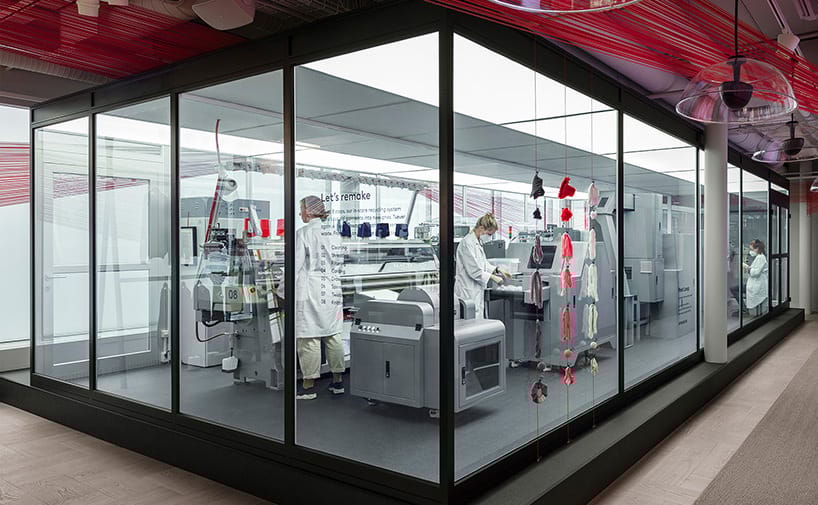
Nobody's crying about the death of authenticity when AI sorts recycling. In pilot tests, H&M's AI system boosted the recyclable share of garments from under 10% to about 60%. That's just good business meeting good sustainability.
Layer 2: The Craft Work
Things get spicier as you move upstream into the work that turns ideas into garments.
Here, AI shows up as:
Design ideation support. Generative tools help designers explore prints, silhouettes and trims faster, a way to see twenty directions in an afternoon instead of three in a week.
Digital development. 3D fitting, AI-assisted pattern drafting and knit programming are squeezing sample rounds; some brands report content timelines collapsing from weeks to days when they pair 3D “digital twins” with AI
Tech-pack & spec automation. Instead of manually copying the same spec blocks into every new style, AI can pre-fill based on previous garments and measurement libraries.
The key boundary here: humans set the brief, pick the direction and veto the output.
LVMH’s line on this is pretty clear, use AI to enhance creativity, not replace it. In practice that means AI can generate 50 print variations; the designer still chooses the one that belongs in the collection, tweaks it and makes sure it actually works on a body, in a fabric, on a runway.
Layer 3: The Soul Work
The final frontier: creative direction, brand identity, that ineffable "it" factor that makes Gaultier Gaultier and not just another cone-bra manufacturer.
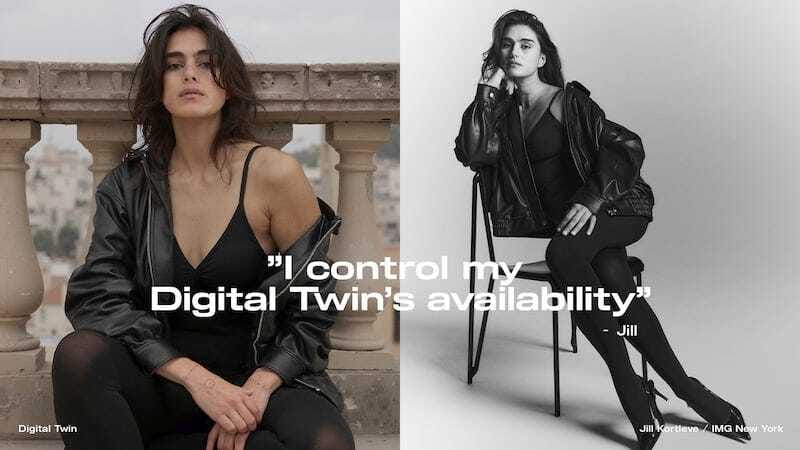
Where (some) brands are drawing hard lines:
No AI for core campaign imagery without human photographers
Human-only zones for signature pieces and couture
Mandatory human sign-off on all creative outputs
This is also where the risks of over-using AI get existential. If everyone is training on the same image scraped from the same platforms, we drift toward an averaged-out moodboard, pretty, optimised, and slightly dead inside.
There’s also the consumer reality: experiments consistently show people rate human-created art and design as more authentic and emotionally resonant than AI outputs (when they know it’s AI), and they’re less willing to pay when something feels “AI-made” rather than designed by a human they can picture.
How we actually use AI at Gaia Custom
We’re not watching this from the sidelines. At Gaia Custom, our bespoke fashion label, our whole thesis is “custom garments at scale”, and AI is threaded through the stack to make that remotely viable.

Here's how we're using AI without selling our souls:
Where AI accelerates our craft:
Sketch-to-image generation for rapid design iteration
Fabric sourcing algorithms matching customer preferences to available textiles
Tech pack generation that turns concepts into production-ready specs
Measurement validation ensuring perfect fits at scale
But here's what we won't let AI touch: the initial creative spark, the story behind each piece, the human connection in consultations, the final aesthetic decisions. Every garment still starts with human imagination and ends with human approval.
Setting Boundaries
Smart brands are creating AI policies that protect their essence while leveraging efficiency. Here's what's working:
1. The "Human Final Cut" Rule H&M's approach: AI-generated model images go through human QA and are watermarked as AI to maintain transparency. No AI output sees daylight without human sign-off.
2. Define Your No-Go Zones Some brands declare: "We will never use AI to create signature pieces or anything carrying our couture label."
3. Transparency as Trust Currency Tag AI involvement clearly. If a print was AI-assisted, say so. If it wasn't, celebrate that too. Honesty can build trust, whereas being secretive could cause backlash if discovered.
Why It Matters Now
We're at an inflection point. McKinsey analysts argue generative AI in fashion is "not just automation, it's about augmentation and acceleration". But acceleration towards what, exactly?
The brands that thrive won't be the ones using the most AI or the least AI. They'll be the ones who understand where fashion's soul actually lives, and guard it fiercely while letting machines handle the rest.
Because here's the thing: an AI can generate a pattern but can it generate taste? That question isn't rhetorical anymore. It's existential.
Pop-Feature

Bodd (Melbourne)
What they do: Bodd is a Melbourne-born body data company that builds full-body 3D scanners and software to capture ultra-rich measurements and wellness data in seconds, from head to toe.
Why it matters: For uniforms today and fashion tomorrow, Bodd tackles one of the most “soulless but essential” pain points: sizing. Scanners can size an entire uniform catalogue from a single scan, cutting fittings, surplus stock and returns, while its data platform pipes precise recommendations straight into ordering systems.
Impact scorecard: 8.5/10 Bodd nails layer-1 and layer-2 problems (measurement, fit & returns) in a way that could quietly unlock true custom-at-scale. It loses a point and a half only because adoption in fashion retail is still early, not because the tech isn’t.
Provocative Q: How far can we push AI into fashion before we hollow out the thing we're trying to scale, its soul?
Is 80% automation with 20% human magic the sweet spot? Or are we one algorithm away from fashion becoming pure performance metrics dressed up as creativity?
Take care of yourselves and share this with someone still think AI is going to take their job.
Grace & Rak